

We have already described how Computer Image produced cartoon animation using its analogue systems SCANIMATE and CAESAR. Another analogue system at automatic inbetweening that deformed a curve by adjusting parameters via an electronic circuit was described in a 1967 paper by Miura et al An application of hybrid curve generation to cartoon animation by electronic computers.
At the same time, several animators were exploring the posibilities of using microfilm recorders. The major problem was producing film with filled in coloured areas. Alan Kitching's 1971 paper Computer Animation: Answer or Problem? gives a good idea of the problems at that time. Colin Emmett's 1972 paper Using a Computer to make Animated Films gives the background to what became the ANTICS system
In December 1973, Alan Kitching's paper Some New ANTICS gives a good overview of what had been achieved at that time using the SC4020-related facilities at the Atlas Computer Laboratory in the UK.
BFI Logo showing how areas were filled
The cartoon industry divides the work of producing film frames into the major cels defined by the animator and the intermediate frames made by the inbetweener. A goal would be that at least the inbetween frames could be produced automatically by the computer acting as inbetweener.
A 1970 UAIDE paper that explores the possibility of interactively using a computer to act as inbetweener was by Franklin Gracer and M W Blasgen at IBM entitled Karma: A System for Storyboard Animation .
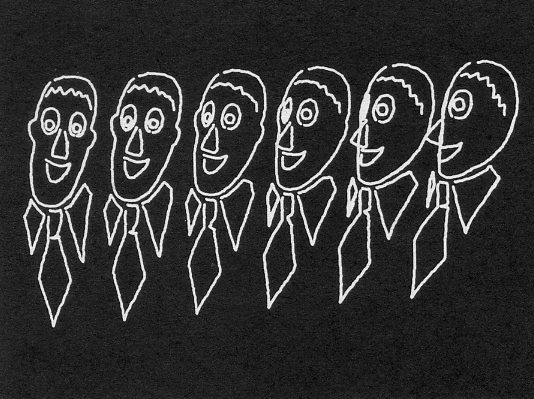
Karma Inbetweens
A 1972 paper by Marya Repko Animated Cartoon Design with a CRT describes a pilot system developed in the Cambridge University Architecture Department to animate a stick figure.
Parke's 1972 paper Computer Generated Animation of Faces shows how to generate realistic computer generated half-tone animated sequences of a human face changing expression.
Nestor Burtnyk and Marceli Wein's 1973 paper Image Quality Considerations in Computer Animation discusses how to increase the richness of the computer generated image.
By 1974, Nestor Burtnyk and Marceli Wein's paper Computer-Generated Key-Frame Animation showed the progress that had been made between 1970 and 1974 in that area.