

By 1959, computers were becoming quite powerful. The IBM 704 was being replaced by the IBM 7090. In the UK, the Ferranti Mercury was in service and the Ferranti Atlas Computer was being developed. Graph plotters were becoming more reliable but still quite slow. Lineprinters were getting faster but still not coping with the demands for even greater amounts of printed output. The potential for using computers to generate animation was being discussed. Some Cathode Ray Tubes had been attached to computers but the resolution was low and the amount of information that could be refreshed to give a flicker-free image was also limiting.
In that climate, Stromberg-Carlson announced its new SC4020 microfilm recorder. The 12-minute film Mark of Man gave an idea of its capabilities.
Most of the major scientific laboratories purchased SC4020s:
- 1959: David Taylor Model Basin, Washington (rented)
- 1960: Bell Labs, Murray Hill, New Jersey
- 1960: North American Aviation Corporation. Developed the SC4020 SCORS Library initially
- 1960: Livermore Labs
- 1962: Los Alamos (still running in 1975). Worked closely with Sandia Labs. Purchased a second SC4020 later
- 1962: AWRE Aldermaston, also used by AERE Harwell, Culham Laboratory, Atlas Computer Laboratory, and some other government departments
- 1964: SANDIA, close to Los Alamos, developed colour film usage
- 1964: Goddard Space Flight Center
- 1966: Polytechnic Institute of Brooklyn, with a service to other US universities (University of Michigan, Johns Hopkins etc)
- 1966: Douglas Aircraft Corporation.
- 1967: Argonne National Laboratory
- 1966?: Boeing Corporation for aeronautic design who provided facilities for its partners
- MIT
- NASA
- IBM
- RAND
- Martin-Marietta, Denver.
- Marshall Space Flight Center
- Computer Sciences Corporation
- Lockheed Missiles and Space Company.
- 1968: Atlas Computer Laboratory, who provided a service to AERE Harwell and UK universities (Aldermaston had replaced their SC4020 with an SC4060)
Significant users of other organisations SC4020 were:
- Ohio State University (North American Aviation Corporation)
- Johns Hopkins University (Polytechnic Institute of Brooklyn)
- Syracuse University (Polytechnic Institute of Brooklyn)
- University of Pennsylvania (Polytechnic Institute of Brooklyn)
- University of Chicago (Argonne National Laboratory)
The complete list is unknown as many went to sensitive government sites. About 30 SC4020 sites existed early on.
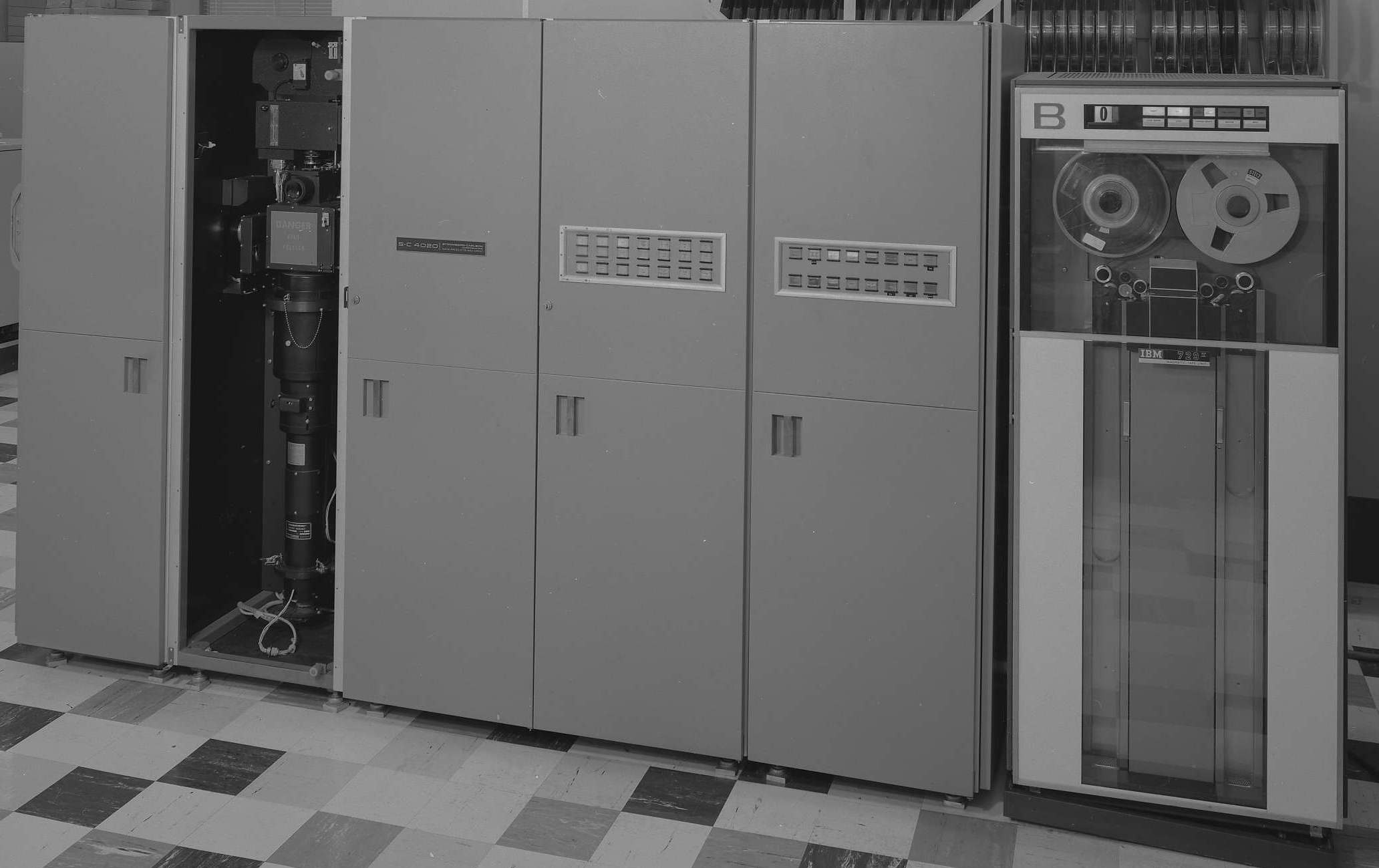
SC4020
A good description of the North American Aviation SC4020 and its use by Ohio State is given in Brenton Groves Thesis at Ohio State.
The SC4020 made computer animation possible even though its manufacturers had not envisaged that as a use!